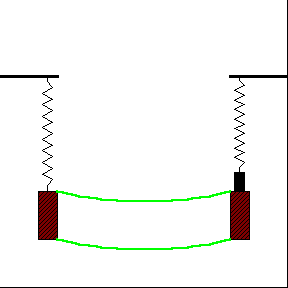
Two solenoid coils connected by wires are arranged so that magnets on springs oscillate in them. When one magnet is set oscillating, the induced current causes the other to oscillate also. Note that the oscillations are coupled through the velocity term rather than the amplitude term as in coupled pendula.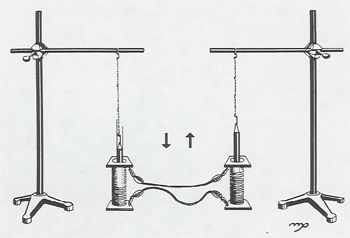
Also Current Coupled Coils (Electrodynamics) [1]
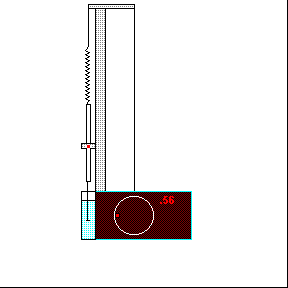
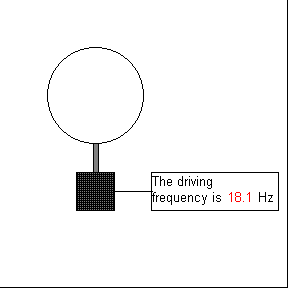
A Pasco apparatus gives digital readouts of the natural period of the oscillator, the driving frequency, and the amplitude of oscillation. A flashing LED shows the phase angle between driving force and the oscillator. This is the type of instrument that is even more interesting to the professor than the students. The driving frequency and amplitude, spring constant, mass, and damping can all be varied. You can quantitatively measure amplitude versus time (undriven), amplitude versus driving frequency, phase angle versus driving frequency, transient response, etc.
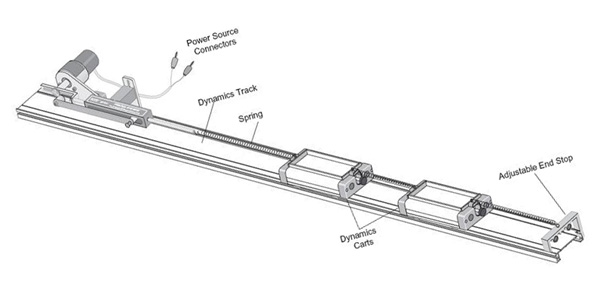
We also have a horizontal version with variable magnetic damping, using the Pasco track and a cart connected by a spring to a sinusoidal drive. This version has no electronic readout.
With this nice piece of apparatus you can vary the driving frequency and amplitude, and the damping (electromagnetic). Essentially the same concepts as above can be illustrated, minus the electronic readouts.
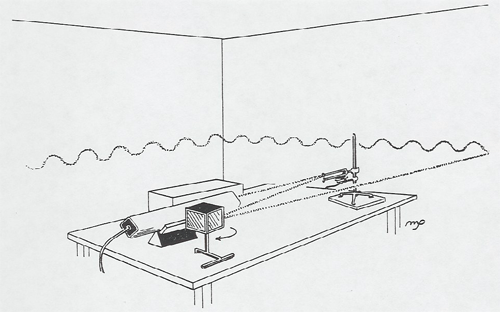
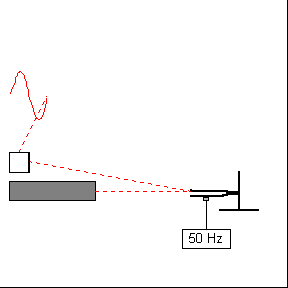
This demonstration is similar to Laser Sine Wave from Tuning Fork [2], but the tuning fork is now driven by a magnet coil connected to an audio oscillator. Normally the beam is not scanned with the rotating mirror, but one merely observes the amplitude of oscillation on the wall. One can demonstrate resonance by observing the large increase in amplitude when the oscillator is tuned to the natural frequency of the fork. If the oscillator is tuned slightly off resonance, beats between the driving frequency and the natural frequency are observed.
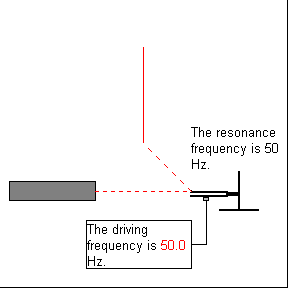
This impressive demonstration shows that the simple harmonic motion of a tuning fork is really a sine wave in time. A laser beam is bounced off a mirror on the end of a tuning fork to a rotating mirror which provides the time axis. The tuning fork is driven by an interrupted magnet.
- This information is from Bob Keolian.
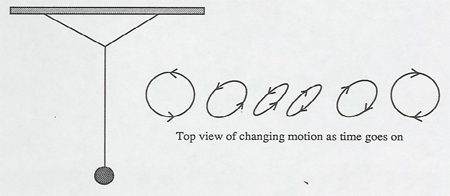
The trick is in the suspension. At the "Mystery Spot," a tourist trap in Santa Cruz, they suspend the pendulum with a chain by casually looping the chain around a horizontal beam associated with the roof of a shed. The chain reattaches to itself, forming a "V" at the top. Your's must do something similar, forming a V at the top, with two fixed attachments at the top of the V and a knot or some other junction at the bottom of the V to a single chain or rope that goes down to the pendulum. The trick is in noticing that for motion perpendicular to the plane of the V, the effective length of the pendulum is from the two attachments at top to near the center of mass of the pendulum below, but for motion in the plane of the V, the junction or knot point remains fixed and the effective length of the pendulum starts from there. This gives a shorter length and slightly higher frequency for motion in the plane of the V than for motion perpendicular to the plane of the V.
At reasonably small amplitudes, say less than about 10 degrees of deflection, the motion of the pendulum can be considered to be a linear superposition of in-plane and out-of-plane motion, with two modes of slightly different frequencies. So you can get different Lissajous figures depending on how you start off the pendulum. If you start off with a circular motion, you are exciting both modes with the same amplitude but with an initial 90 degree phase shift between them. As the modes progress in time, the instantaneous phase between them (w_1t - w_2t - initial phase) changes with time. Eventually, the two modes are in phase and the pendulum move in a straight line 45 degrees from the plane of the V. Later the phase is such that the circle changes direction. If you let the pendulum go, the pattern repeats itself. But that isn't as much fun as stopping the pendulum after it has reversed direction once and cooking up some BS story about a gravitational or magnetic anomaly in the mantle below Los Angeles that causes the change in direction.
If you start the pendulum off in planer motion either in the plane of the V or out of the plane of the V, then you excite only one of the modes, and the motion stays in its plane. At larger amplitudes the linear superposition of modes picture breaks down, at around 30 degrees of deflection. The two modes couple parametrically by modulating the tension in the rope at twice the oscillation frequency, but that is another story.
Parametric oscillation occurs when one of the parameters of the system is varied. A child can "pump" a swing by standing and raising and lowering her center of mass periodically, changing the length of the pendulum. The child pumps at twice the pendulum frequency, generating a sub harmonic.
A very simple demonstration of parametric oscillation is the coupling of the pendulum mode to a mass on a spring. When the spring frequency is approximately twice the swinging frequency (pendulum mode), the spring mode parametrically drives the pendulum mode, but the pendulum motion causes the tension in the spring to vary at twice the pendulum frequency, and therefore resonantly drives the spring mode. The transfer of energy between these two modes is impressive.
This exhibits wave like behavior, but the wave is an illusion. The pendulums are independent.
1. The Driven Mass on a Spring [3] can be easily set to resonance. Measure the natural period with the LED readout and then drive at the inverse, the natural frequency, also measured by the LED readout. Or adjust the phase between the driver and oscillator to 90 degrees lag as shown by the phase readout.
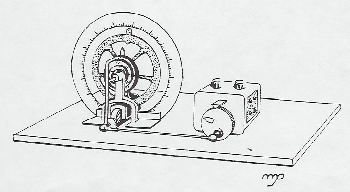
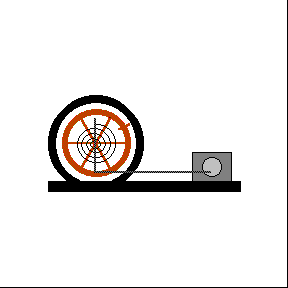
2. Resonance can also be found for the Driven Torsion Pendulum [4]. This is a little more difficult since there are no electronic readouts and the Q of the torsion wheel is quite large.
3. The Driven Tuning Fork [5] demonstrates resonance at high Q. as the frequency synthesizer is adjusted in steps of 0.1 Hz near its resonant frequency.
4. In Beats and Sympathetic Vibration [6], see show how one vibrating tuning fork can acoustically induce vibrations in another nearby, if it is tuned to the same frequency.
5. A dramatic demonstration of resonance in Breaking Glass with Sound [7].
Along with this we have the Tacoma Narrows Bridge collapse on video.
6. The Pasco track can be connected to a sinusoidal drive to demonstrate a driven simple hormonic oscillator. When the motor drive matches the resonance of the system, energy gets pumped in and the amplitude of the oscillations grow dramatically. This system can also be used to show a critically damped and under damped system by bringing an aluminum sheet close to two magnets attached to the cart.
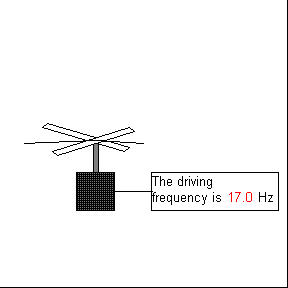
7. A new demonstration is "resonance strips". Several metal strips of increasing length are bolted together in a star shape. When the device is vibrated with a mechanical driver controlled by a signal generator, the different strips come to resonance in the range 10 50 Hz by vibrating strongly at different frequencies according to their lengths. The class can see the frequency of the driver on a large display frequency counter.
8. The mechanical driver will also vibrate a ten inch wire loop, and will induce standing waves with 3, 5, 7, etc. antinodes around the circle at specific increasing frequencies. Rudnick's String [8] shows the same effect on a linear string.
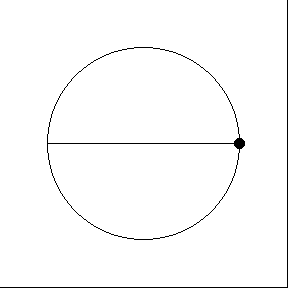 |
a. Analogy of Simple Harmonic Motion to Circular Motion:
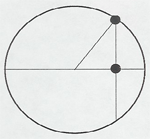
A device which you crank around fits on a projector. One dot moves around the circle while another dot projected on a diameter stays underneath the first dot and executes simple harmonic motion. |
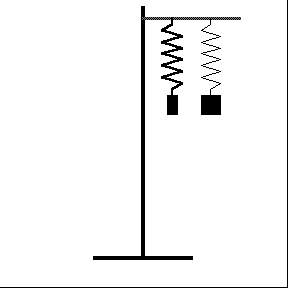
| b. Mass on a Spring:
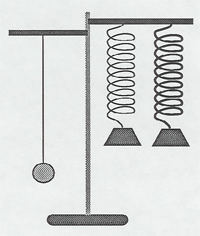
Springs of two different spring constants are supplied along with several weights. A ruler device can be used with different weights on the springs to measure their k's. With a 200 g mass on the stiffer spring, the spring mode and pendulum mode are parametrically coupled. |
 |
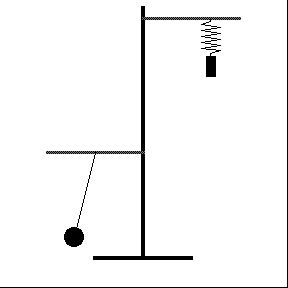
| c. Simple pendulum:
A simple pendulum is on the same device. You could also use the "Faith in Physics" Pendulum [9], or track a pendulum with a sonic ranger and plot out the sine waves of its motion (see Motion Concepts - Sonic Ranger [10]).
|
| d. Spring compared to Pendulum:
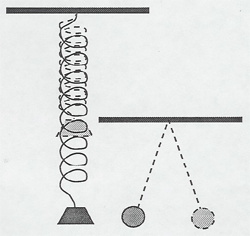
A pendulum whose length is equal to the displacement of a spring from equilibrium when the weight is attached has the same period of oscillation as the spring. |
 |
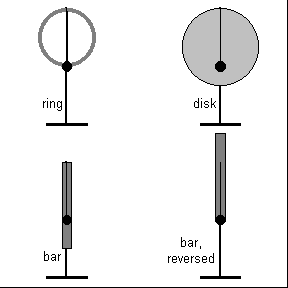 |
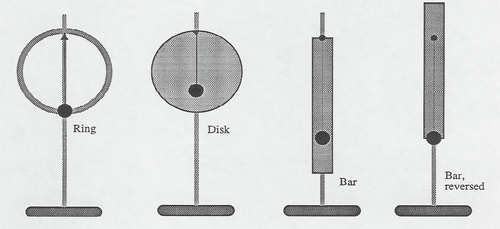
e. Physical pendula:
Each physical pendulum is compared to a simple pendulum with the same period. The bar can be reversed as shown, and has the same period in either position. |
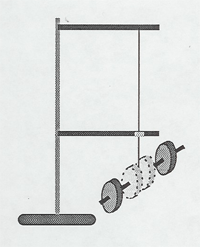
f. Torsion pendulum: the weights can be moved as shown to change the rotational inertia, and therefore the period.

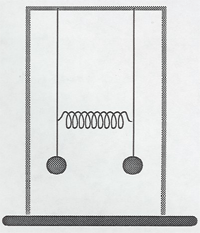
g. Coupled pendula: Three varieties are available.
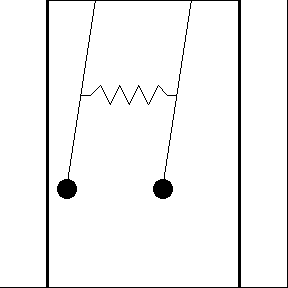
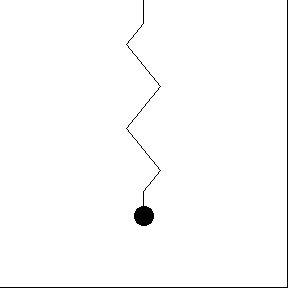
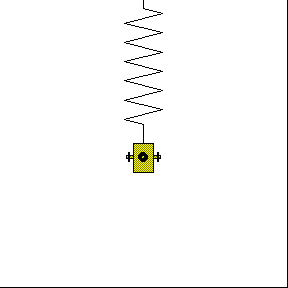
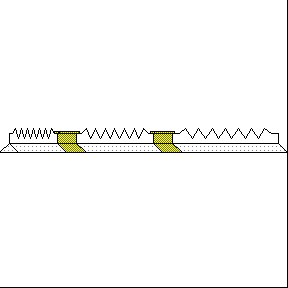
h. Coupled gliders on an air track: Two gliders with three springs, two running to the fixed ends and the third between show normal modes and exchange of energy.
i. Some Unusual Pendula: Suggested by Bruce Denardo
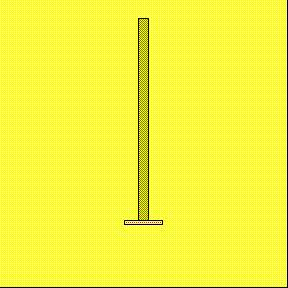
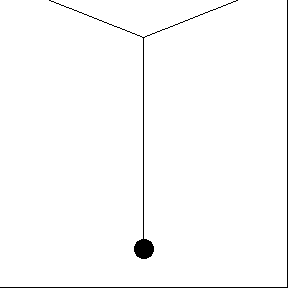
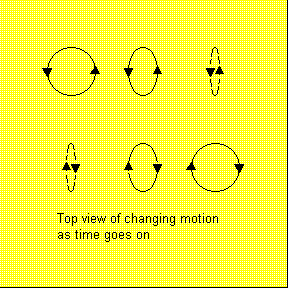
Simple pendulum, conical pendulum, collisions, Lissajous figures, and others can all be illustrated with this interesting demonstration. See Two Balls Hanging (Momentum and Collisions) [13]
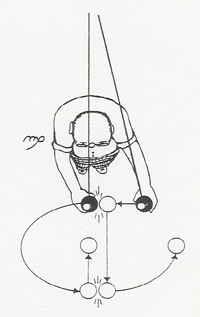 [13]
This is the famous torsional wave device. Among the concepts that can be demonstrated are:
A descriptive booklet is available.
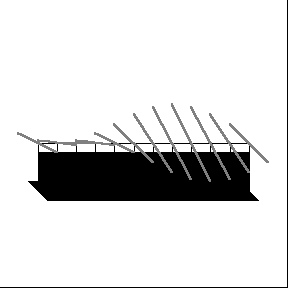
See Doppler Shift (Acoustics) [14].
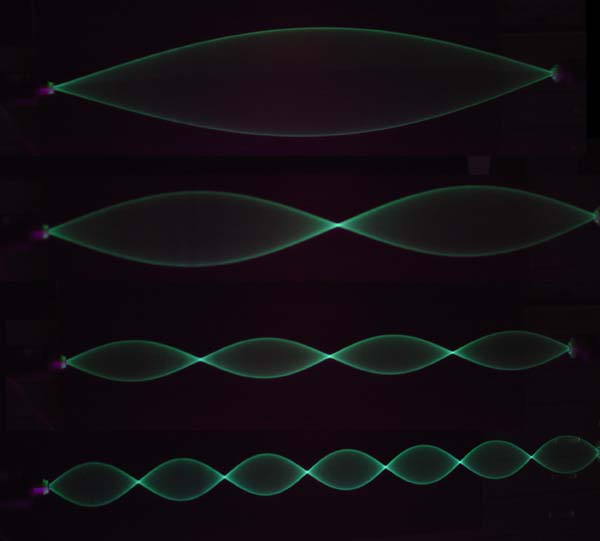
This demo illustrates the normal modes in standing waves. A black light shines on a motor- driven fluorescent string. As the input frequency changes and corresponds to one of the normal modes or harmonics, the nodes and antinodes appear. A strobe may be used to "freeze" a particular harmonic.
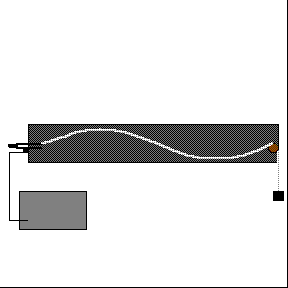
The Pasco Fourier synthesizer produces two 440 Hz fundamentals and eight exact harmonics. You can vary the amplitude and phase of any of these signals and add them up to generate a complex wave form. The output goes to an oscilloscope and also to a speaker so the class can hear the wave form. The two fundamentals can be added alone to show the sum of two sine waves, or sent to two speakers to demonstrate acoustical interference.
The Fourier analyzer shows the power spectrum of a complex wave form on an oscilloscope.
Applet by Fu-Kwun Hwang --- Virtual Physics Library [15]
How to play:
The default value for base frequency is f=100Hz, you can change it from the TextField (20 < f < 2000). The ear is 1000 times more sensitive at 1kHz than at 100Hz.
| frequency range | ||
| speech | song | |
| adult male | 80-240 | up to 700 |
| adult female | 140-500 | up to 1100 |
Can be illustrated with Moiré patterns on the overhead projector, or by adding sine waves of two different frequencies on the oscilloscope (M.P. Hagelberg, Am.J.Phys. 46(5),579 (1978)), or by showing a good film strip on the subject (#600).
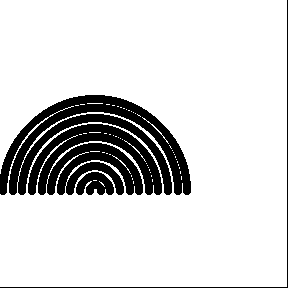
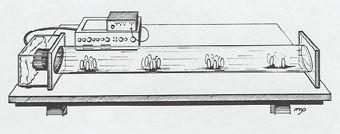
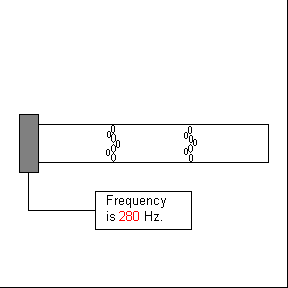
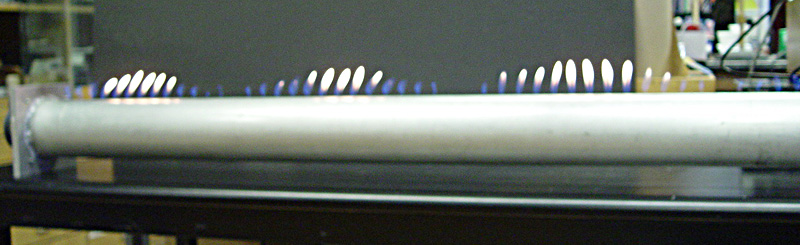
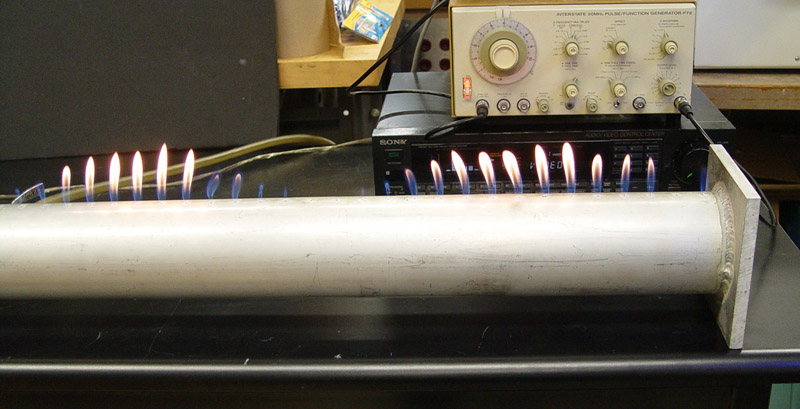
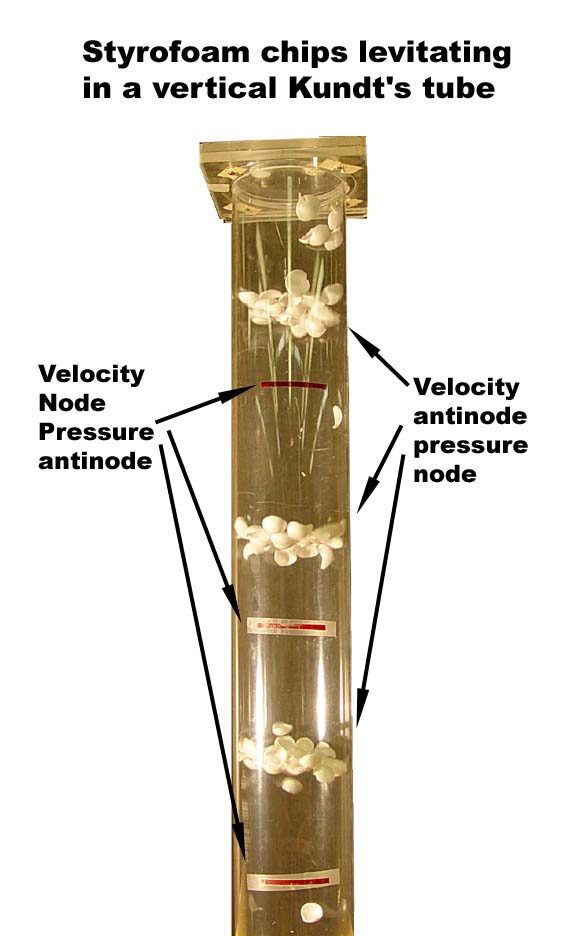
Our large Kundt's Tube designed by Prof. Rudnick dramatically demonstrates standing acoustical waves. The speed of sound can also be measured. See Kundt's Tube (Acoustics) [16].
|
Further demonstrations that can be done with the Kundt's tube are described here [16] in the Acoustics section of the demo manual. |
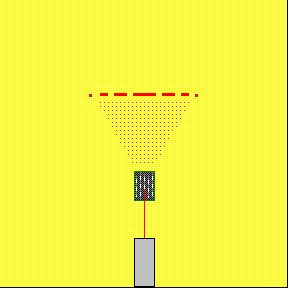
A laser through various slits will project interference and diffraction patterns on the overhead screen. See Single, Double, and Multiple Slits [17].
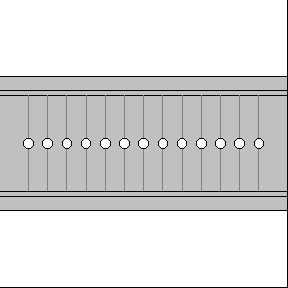
A Russian wave machine separately models the motion of a string of beads undergoing transverse and longitudinal wave motion. The mechanism of its operation is almost more interesting than the effect it demonstrates.
Longitudinal and transverse waves can also be separately demonstrated by the Space Phone [18] and the Rubber Hose [19]. A slinky can be used to demonstrate both also.
 |
|
The 8D microwave lab setup can be used to demonstrate standing waves, interference, diffraction, polarization, and tunneling. A large lecture hall meter displays the output readings to the class.
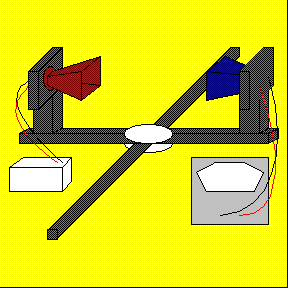
Ultrasonic sound wavelength and interference can be demonstrated. See Acoustical Interference [20].
Stretches across the front of the lecture hall to illustrate standing wave modes. Strobes can be used to stop the motion.
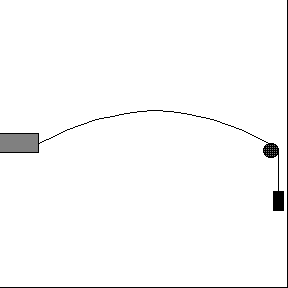
Our large ripple tank projects on the overhead screen to demonstrate reflection, interference, diffraction, etc.

Clamp a wave spring or rubber hose to the table and you can send a pulse along and see it reflected. The brass spring works best. Free end reflection can be accomplished by attaching a 1/2 meter long string to the end of the spring. If the end of the hose or wave spring is laid on the floor, you can send a pulse down and have it absorbed with no reflection.
is a longer, thicker string driven by a speaker. Hence, the driving frequency as well as the string tension can be varied. The equation v = (f/m)1/2 can be checked with either demonstration. This demo stretches across the front of the lecture hall to illustrate standing wave modes.
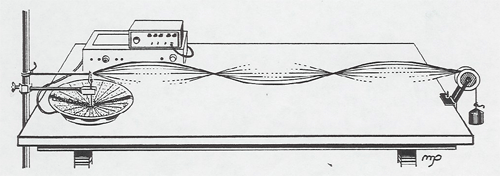
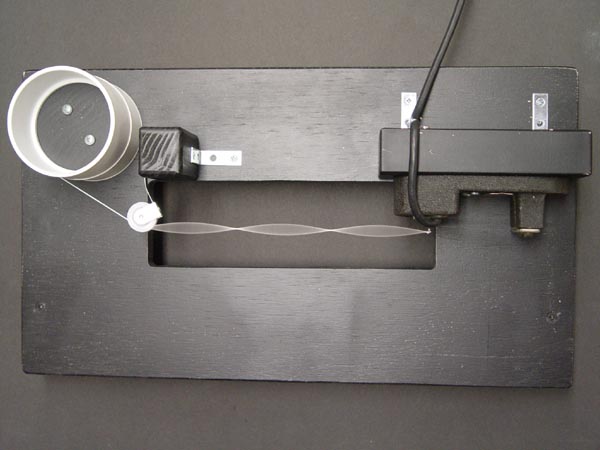
Vibrations of soap films on wire frames show various modes of oscillation.
This device can be used to demonstrate longitudinal and transverse waves. A pinch of the spring demonstrates a longitudinal wave and a pulse sent be flicking the wrist sends a transverse wave.
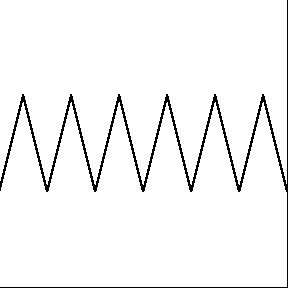
Metronomes of the same frequency and resting on the same base are started randomly. They synchronize after a short period of time. In this case the base is free to move. In 1657, Christian Huygens was the first to observe this phenomenon in the form of clock synchronization. The phenomenon of spontaneous synchronization is found in circadian rhythms, heart& intestinal muscles, insulin secreting cells in the pancreas, menstrual cycles, ambling elephants, marching soldiers, and fireflies, among others.
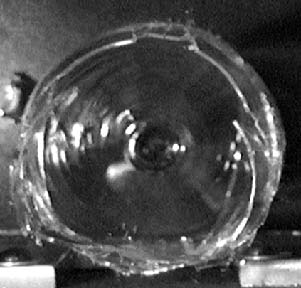
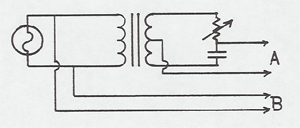
Two speakers are set a meter or two apart in front of the class. They are driven by an audio oscillator through a stereo amplifier at the same frequency, but the phase of one channel is variable with respect to the other, either using the circuit below, or the two fundamental channels of the Fourier synthesizer, Z.X.1. The phase is varied for the class so each student can hear the difference between constructive interference (loud) and destructive interference (soft). Then the phase is set at zero and all the students hearing a loud tone are asked to stand up, displaying the interference pattern across the lecture hall.
This demonstration occasionally produces erratic results in the lecture halls because of reflections from the walls. It works well in the anechoic chamber, but then you can take in only 10 - 15 students. A visit to the anechoic chamber and reverberation room would be very nice for a small class.
Ultrasonic Acoustical Interference - Small piezoelectric transducers (barium strontium titinate) resonate at 40KHz and can serve either as speakers or microphones. Two hooked to the same signal generator produce a very pretty interference pattern, which is read out by a third on an oscilloscope. Also the speed of sound can be measured by using one as a transmitter and a second as a receiver several centimeters away. The received signal is displayed on an oscilloscope synchronized to the transmitted signal. From the distances between phase coincidences and the frequency, the speed of sound can be computed.
Two tuning forks, one of which is adjustable in frequency, demonstrate beats. If the two tuning forks are adjusted to the same frequency and set next to each other, striking one will set up vibrations in the other.
There is a good computer demonstration of beats, which closely represents the tuning fork demonstration above. Two sources are created which play through the room speaker. The wavelength can be changed by dragging and the effects heard. At the same time, the beat waveform or the frequency spectrum can be viewed. This provides a couple different ways to visualize the beats.
The beat bars, tuned to 435 and 440 Hz, produce loud, definite beats. A strong effect is also produced by activating two Rijke Tubes of slightly different lengths. (See Rijke Tubes [23])
Another good demonstration beats consists of two audio oscillators hooked through a stereo amplifier to speakers. The summed signal is also sent to an oscilloscope so the wave envelope can be seen.
This standard demonstration which shows that sound is not transmitted by a vacuum has been improved by Prof. Rudnick. A sound transmitting seal over the vacuum jar has been provided so that the bell can actually be heard before the jar is evacuated. Circuitry built by R. Keolian rings the bell in bursts and simultaneously flashes a light so that the students can see that the bell is still ringing after the jar is evacuated and they can no longer hear it (and also note that light is transmitted by a vacuum, even though sound is not!).
Some have pointed out that this demo is not really what it seems. Sound travels very well in a poor vacuum, as long as the mean free path for collisions of air molecules is much less than the size of the container. For pressures achievable with the roughing pumps we use, about 1/10,000 of atmospheric pressure, the mean free path is about 1 mm. The speed of sound is proportional to the square root of the pressure divided by the density. Since the density is proportional to the pressure, the velocity of sound is independent of pressure.
So why does the sound diminish as the air is pumped out? It is a problem of the impedance match between the air and the bell and the air and the glass. The impedance of the air is proportional to the square root of the product of the pressure and density. Pumping out the air reduces the impedance of the air by a factor of 10,000 and the vibrations of the bell are not coupled to the air. If there was sound in the remaining air, it would not couple to the glass but instead be reflected at the interface.
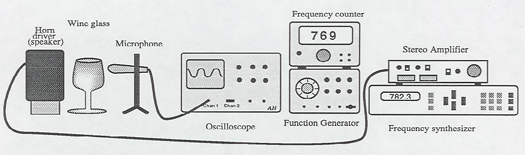
This demonstration requires a fair amount of equipment. A stereo amplifier, whose output goes to a horn driver near the wine glass to be broken, can be switched between a frequency generator, easily tuned through a broad spectrum, and a frequency synthesizer which can generate a?very accurate frequency. The response of the wine glass to the sound is monitored with a microphone connected to an oscilloscope. The first four steps can be prepared before the lecture, but most instructors like to run through them with the class so the students can see the entire operation.
We have the Tacoma Narrows Bridge collapse on videodisk. There is also a good online version which you can link to. The link is clickable Tacoma Narrows Bridge Story http://youtube.com/watch?v=ASd0t3n8Bnc [24]
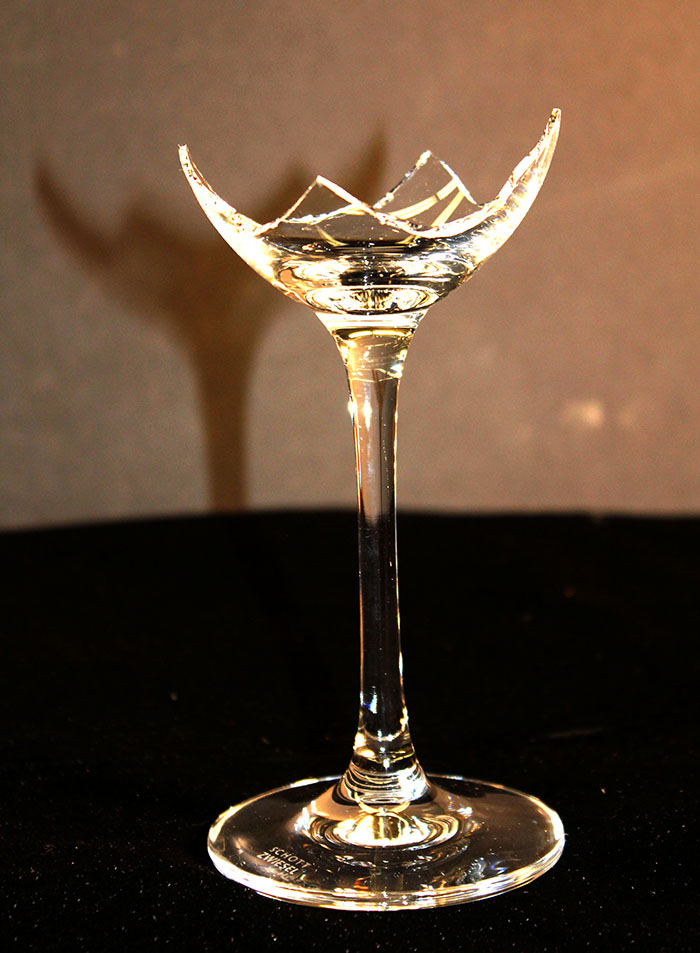
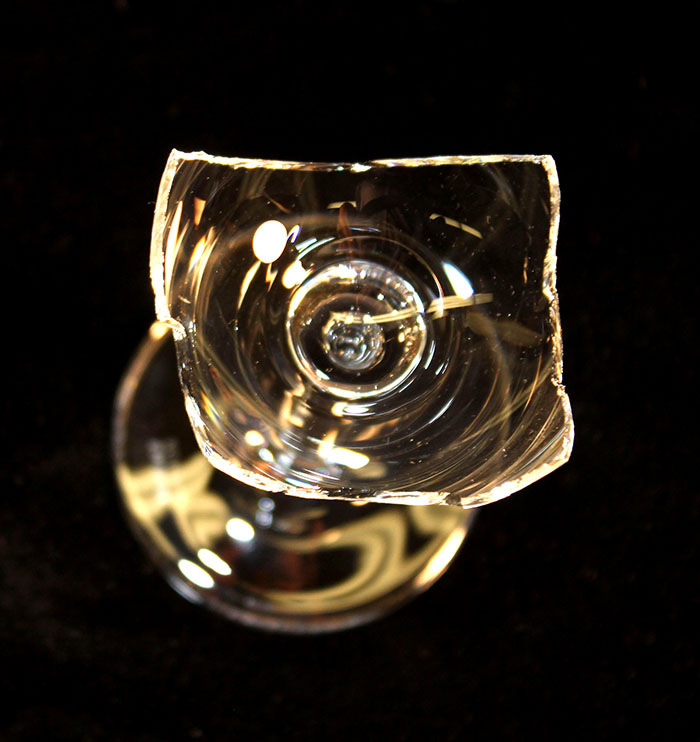
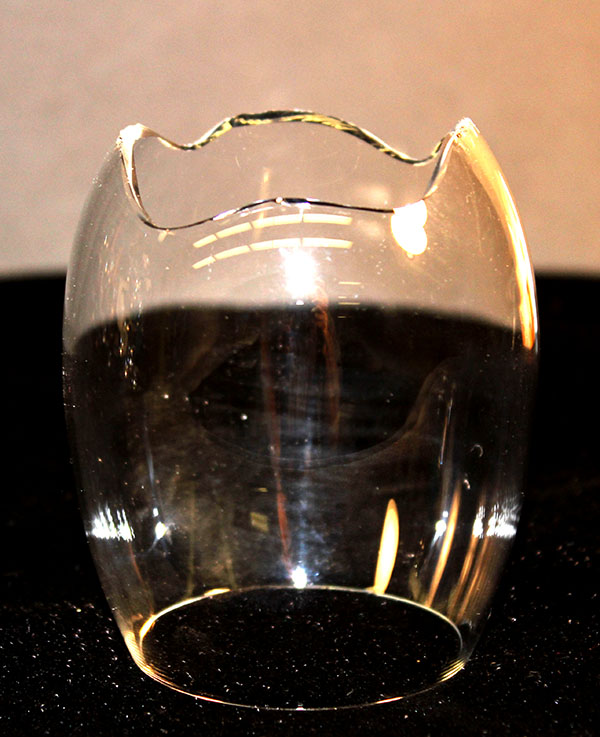
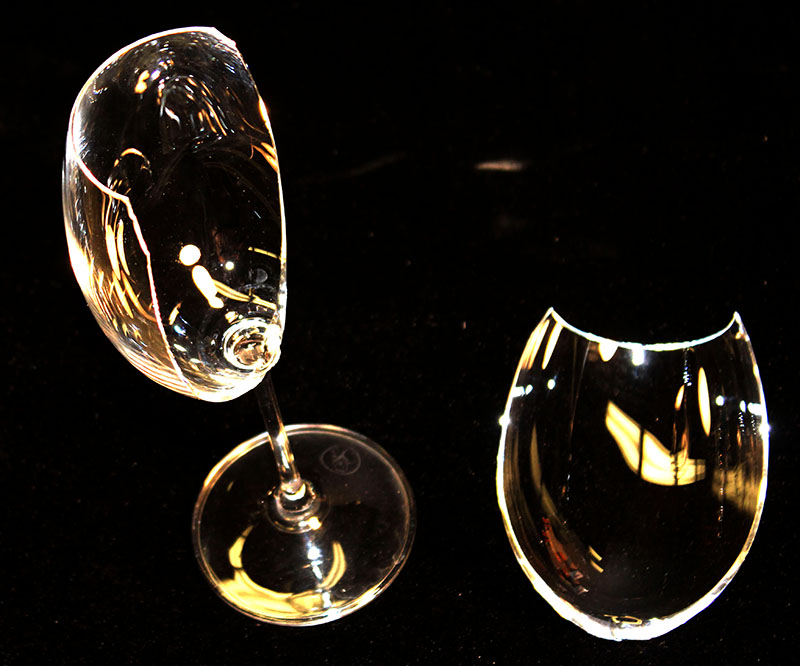
The fundamental resonance of a wineglass is the bell mode which can be seen in the strobed video above. Two wavelengths of the resonant frequency fit around the rim, travelling in opposite directions, constructively and destructively interfering. There are four nodal points along the rim of the glass which don't move. In between the nodal points the glass walls are moving back and forth. Sometimes when the glass shatters it leaves evidence of the nodal structure as seen in the gallery below. The last two are rare breaks.
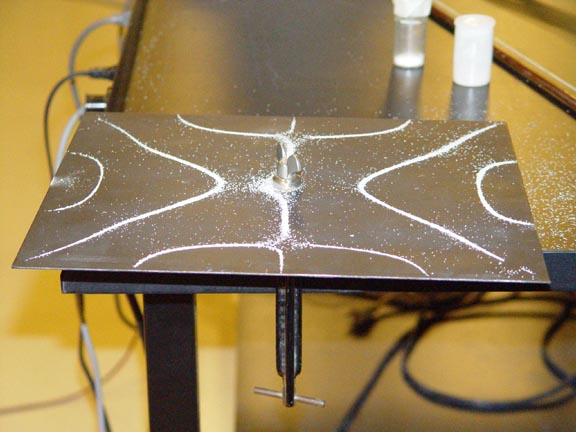
Exquisite patterns emerge from salt scattered on a metal plate which is stroked with a bass fiddle bow, illustrating two dimensional vibration. A video camera will enlarge the patterns for the class to see in the Knudsen lecture halls.
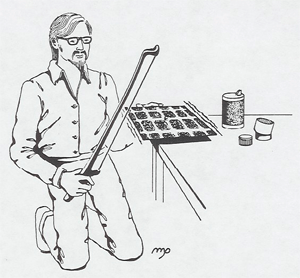
To form patterns, hold your fingers firmly on the nodes indicated, but try to localize them as much as possible. Use plenty of rosin on the strings and bow firmly. You are bowing on anitnodes; as you go from pattern to pattern, bow on a node of the previous pattern. That way you eliminate the previous one. a well bowed pattern gives a pure tone. And finally, practice, practice, practice!
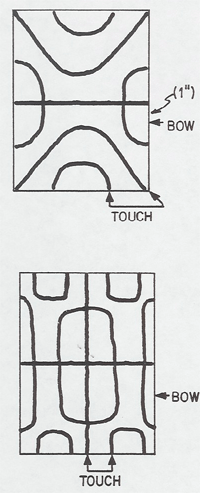
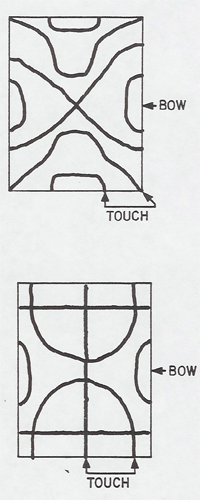
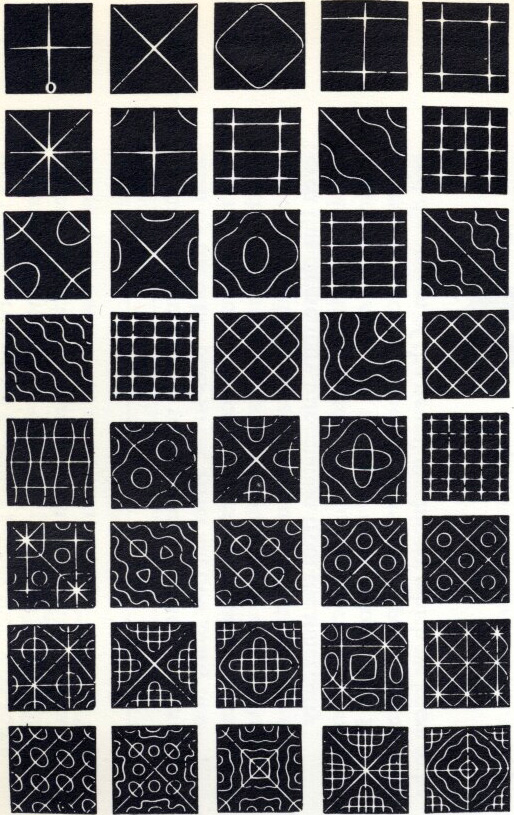
Chladni patterns can also be formed by using circular or rectangular metal plates on a mechanical driver controlled by a signal generator. This method avoids having to practice your bowing. The patterns are now different since they have antinodes at the center (which is being vibrated) rather than nodes with the center rigidly attached and the edge bowed.
 [26]
The Doppler effect for sound waves is dramatically demonstrated by swinging a ringing tuning fork around your head.
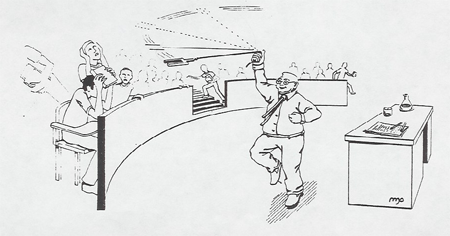
The whistle ball is another good way to demonstrate doppler shift. A sponge ball has been stuffed with a battery operated whistle in its core. As the ball is thrown around the lecture hall, the students hear a shift in the ball's frequency.
A sound clip is available indicating the doppler shift of a car horn at 30 MPH [27]. The link is http://www.exploratorium.com/imagery/sounds/30_MPH_doppler.au
The animated applet below is a good way to visualize the doppler shift. Click in the box below and then allow the applet to run. Click on the run button. You can control the speed of the source. The applet is also available on our ephysics site [28].
The picture below shows boat wakes which occur when the boat moves faster than the speed of water waves. Compare this to the ephysics applet when the source moves faster than the speed of sound.

Also dramatically demonstrates acoustical standing waves.
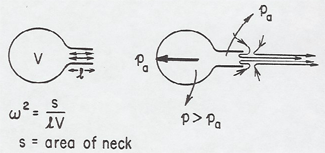
Small "balloon" flasks serve as Helmholtz resonators. When they are placed near a small speaker connected to an audio oscilator, the resonant frequency is very apparent as you tune through. The ejecting air will blow out a match. The resonant frequency will also be sounded if you blow over the opening as when producing a note from a bottle.
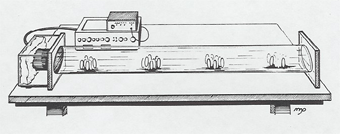
Our large Kundt's tube, designed by Prof. Rudnick, dramatically demonstrates standing acoustical waves. See the animation of standing waves [29] in the waves section of the demo manual. Additional demonstrations and accessories with this apparatus are:
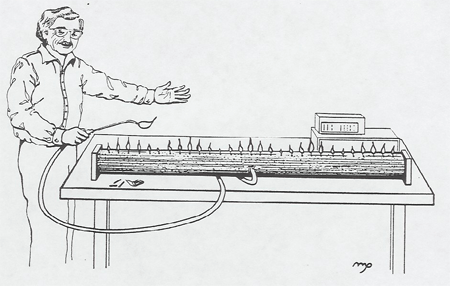
Several large metal tubes ROAR impressively when held vertically over Meker burners. The heat maintains the open-end acoustic standing wave mode (about 100 Hz).
A "Magic" Rijke tube has a wire gauze inside about one quarter the way from the bottom. Keeping the gauze concealed from the class, heat it red hot by holding it over a Meker burner on the floor. The tube will ROAR for some time after being removed from the flame from the stored heat. You can "tip the sound out" by tilting the tube horizontal, or block it by placing the lower end on the floor, and the ROARing will restart when the tube is vertical away from the floor if the gauze is still hot. Also, if you "tip the sound out", and then run across the classroom with the tube horizontal, bottom first, the ROARing will restart.
Heat up the magic Rijke tube, hold it away from the flame so it ROARS with the retained heat, and hold the normal tube over the flame. The tubes beat in their ROARing since, although they have the same lengths, they have slightly different diameters.
Rijke Tubes and Variable Stars
Similar to the standing sound waves exhibited in the case of the Rijke tubes, the pulsation mechanism for variable stars such as the Cepheids can be understood as a resonance of pressure waves of a particular period in the interior of those stars.
In the case of the Rijke tubes air can move in and out of both ends. A heated metal mesh placed a quarter of the way up from the bottom heats the air flowing past it. This flow of air is a combination of the convection current caused by the transfer of heat from the metal mesh and the sound wave that is set up for the condition of two open ends. For half of the oscillation cycle of the sound wave air moves in from both ends as it flows towards the center generating a pressure antinode (displacement node) there. Even though some of the air moving past the hot metal mesh has already been heated during the cycle prior to this, some additional cool air flows in, passing through it and acquiring thermal energy and further increasing the pressure, thus reinforcing the oscillation. For the remaining half cycle air passing by the metal mesh while flowing outward from the center of the tube is already heated and therefore energy transfer is minimal.
In the case of a Cepheid variable star, the partial ionization occurring in a He envelope allows for an increased opacity with increasing pressure, and is responsible for setting up the pulsation mode. The stage when the opacity is increasing corresponds to the part of the vibration cycle in the case of the Rijke tube when energy is transferred and the increase in pressure is amplified.
In both cases analogy can be drawn to an internal combustion engine.
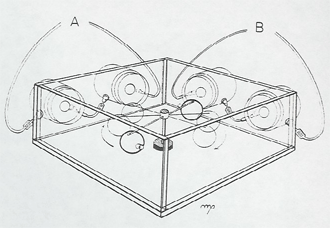
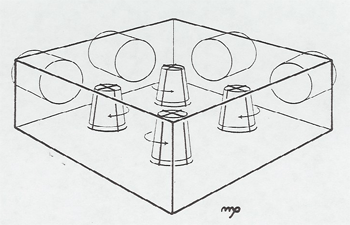
Four small loudspeakers are used to excite standing waves in a plexiglass "room" 40 ¥ 40 ¥ 12 cm high. At 400 Hz one half wave fits in the 40 cm. About 140 dB of sound can be established in the "room". An audio oscillator feeds channels A and B through a stereo amplifier, but one channel is phase shifted 90° to the other. A reversing switch is provided to change the 90° "lead" to "lag". Thus, by using the balance control one set of speakers, or the other, or both, 90° out of phase, can be excited. By engaging the monaural mode the two signals are added, and both sets of speakers receive the same phase signal. A sample set of demonstrations is described below.
This record, produced by Bell Telephone Laboratories, (Folkways FX6136) is available on cassette tape. Single cuts can be played to the class.
Sound vibrations, compression and rare fractions: The Science of Sound has been recorded eight decibels lower than usual so that illustrations of acoustic phenomena can be presented with loudness approximately proportional to their level in nature. Adjust the volume of your phonograph so that the announcer sound as if he were speaking to you in a normal conversation voice. Then, orchestral music and certain other sound effects that would normally be louder than a human voice will sound louder.
The frequency range of the average human ear, sweep tone from 30 to 15,000 PCs.: This recording and the phonograph equipment on which you are playing it are, even more than your ear, limited in their ability to reproduce faithfully very lost and very slow sound vibrations. However, with high-fidelity equipment, you may be able to hear vibrations between about 50 and 12,000 cps. The sweep frequency tone is recorded according to the recommendations of the RIAA. Playback equipment that is equalized for the RIAA curve and operating correctly will reproduce all tones from your loudspeaker with approximately equal power. Differences in the apparent loudness of the various frequencies are due to the characteristics of the human ear. These pitch versus loudness characteristics have been charted by Fletcher and Munson and can be seen in most standard textbooks on sound and acoustical engineering.
How pitch depends chiefly on frequency and is some extent on loudness the subjective nature of pitch: the mel scale. the standard reference for 1000 mels is a 1000 cps tone at 40 decibels above 0.0002 dynes per square centimeter. the mel scale tones on this record are presented at greater intensities so that they can be heard more easily.
Measuring sound intensity; standing waves; the decibel: The average human ear has a maximum range of about 130 decibels between the threshold of hearing below which no sound can be heard, and the threshold of feeling, above which sound intensity becomes uncomfortable. Since the range of ordinary phonographs is limited we have not attempted to demonstrate an intensity range of more than about 40 decibels.
Two instances of the Doppler Effect: (1) observer moving, sound source stationary;(2) observer stationary, sound source moving. (the sounds of racing cards were recorded at the 1956 International Sports Car Grand Prix, Watkins Glen, N.Y.).
Speech accompanied by echo from reflecting surfaces at 500 ft., 200 ft., and 50 ft: How speech sounds in rooms with long, moderate, and short reverberation times. This demonstration was produced in Bell Telephone Laboratories by means of magnetic tape delay devices in combination with a reverberation chamber. So that delay differences could be heard easily, the echoes are recorded somewhat louder than generally experienced. An attempt is made, however, to present the loudness of an echo in accordance with the length of the echo path.
Speech and music with some frequencies delayed in transmission: This demonstration was simulated by using a delay system with multiple recording heads located around a rotating magnetic disc. the sound is split into two bands by high-pass and low-pass electronic filters that have a cross-over frequency of 3000 cps. (The music is a trumpet fanfare by Semmier.)
The fundamental; overtones; harmonics: The lowest frequency present in a sound is called the fundamental, frequencies high than the fundamental are called overtone frequencies. A special tone generator developed at Bell Telephone Laboratories was used to produce the various tones used in this demonstration.
The effect of overtones on sound quality: A factory whistle, a soprano, and a piano are compared with and without overtones. Special low-pass filters with unusually steep slopes of cutoff (150 decibels per octave) were used in this demonstration to eliminate some overtones. Attenuation in the stop band is 55 decibels or greater.
Music and speech with various frequency ranges eliminated: The filters that were used in this demonstration have sharp cutoffs. 250 decibels per octave. Attenuation in the stop bands was 55 decibels or greater. Wedding Day at Troldbeugen by Greig is played by the Bamberg Symphony Orchestra.
The speed of sound is given by v =rad(gp/p). Since the density p is proportional to the molecular weight A at STP, then v = 1/ rad(A) for monatomic gasses. (In comparing with air we also have to take into account the different g.) For a light gas like helium the speed of sound is higher, and more wavelengths can fit in a fixed distance like an organ pipe or human voice box. The pitch is therefore raised by this same factor 1/ rad(A), about 3 for helium. You can breathe some helium and demonstrate the Donald-Duck-like effect, or blow some into an organ pipe to raise its audible frequency.
What gas shall we use to lower the pitch of the voice?- a gas of high molecular weight, but another most important property is that it be non-toxic. Some possibilities are listed below:
| Gas | Molecular weight | Approximate price for 1 mole (22.41) at 99.995 purity |
| helium | 4 | $1 |
| air | 29 | free for now |
| krypton | 84 | $228 |
| xenon | 131 | $550 |
| radon | 222 | trace quantities supplied free in some municipalities |
| sulfur hexafluoride | 146 | $4 |
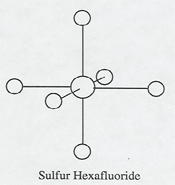
Radon is the heaviest gas, and, chemically it is completely inert. However, since its longest lived isotope has a half?life of only 3.8 days, sulfur hexafluoride is the gas of choice. This gas is colorless, odorless, tasteless, water-insoluble, thermally stable, non toxic, and non-reactive. As shown in the diagram, the six fluorine atoms completely surround the central sulfur atom protecting it from attack. The strongly electronegative fluorine atoms make this gas very difficult to ionize. It is a much better gas-phase insulator than air; thus, it is used in high voltage electrical switches. You might wish to demonstrate the heaviness of this gas by filling a balloon and then throwing the "lead balloon" across the room.
Our formula above predicts that the speed of sound in sulfur hexafluoride is about half as fast as in air, so the pitch is halved.
Lecture bottles of He are available for demonstration. It is a good idea to allow some breathing space between the demonstrations to make sure you keep getting plenty of oxygen.
Ultrasonic Xylophone - range from the high audible frequencies into the ultrasonics.
Galton's Whistle - range from the high audible frequencies into the ultrasonics.
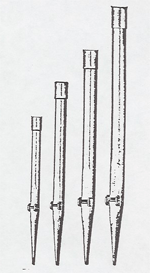
Organ pipes - one is of variable length to show the dependence of frequency on length.
Sicks - You can play a tune with a set of eight sticks tuned to the major scale by dropping them in the correct order.
Singing tube - when whirled around your head will sound the notes of a major chord.
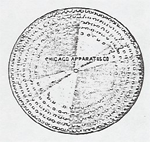
Siren disk - has four evenly spaced rows of holes yielding a major chord when sounded. The fifth row is unevenly spaced and emits a noise when sounded.
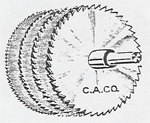
Savart's toothed wheels - will sound a major chord when rotated with a card held against its teeth.
Ultrasonic Receiver - beats ultrasonic signals from a speaker "tweeter", or the Ultrasonic Xylophone (e) or Galton's Whistle (f) in the 20-40 KHz range into audible range.
Music Box - Each tine of the box acts as a simple harmonic oscillator and vibrates at a particular constant pitch. The pins on the box pluck the tines to make them vibrate but the tines alone don't emit much sound. To project sound, the box couples its vibrating tines to a surface.
Links:
[1] https://demoweb.physics.ucla.edu/node/200
[2] https://demoweb.physics.ucla.edu/node/270
[3] https://demoweb.physics.ucla.edu/node/268
[4] https://demoweb.physics.ucla.edu/node/269
[5] https://demoweb.physics.ucla.edu/node/271
[6] https://demoweb.physics.ucla.edu/node/56
[7] https://demoweb.physics.ucla.edu/node/58
[8] https://demoweb.physics.ucla.edu/node/278
[9] https://demoweb.physics.ucla.edu/node/265
[10] https://demoweb.physics.ucla.edu/node/263
[11] https://demoweb.physics.ucla.edu/node/266
[12] https://demoweb.physics.ucla.edu/node/262
[13] https://demoweb.physics.ucla.edu/node/276
[14] https://demoweb.physics.ucla.edu/node/61
[15] http://www.physics.ucla.edu/demoweb/ntnujava/indexPopup.html
[16] https://demoweb.physics.ucla.edu/node/63
[17] https://demoweb.physics.ucla.edu/node/90
[18] https://demoweb.physics.ucla.edu/node/280
[19] https://demoweb.physics.ucla.edu/node/279
[20] https://demoweb.physics.ucla.edu/node/52
[21] https://demoweb.physics.ucla.edu/sites/default/files/demomanual/harmonic_motion_and_waves/waves/spring_wave_long.mov
[22] https://demoweb.physics.ucla.edu/node/53
[23] https://demoweb.physics.ucla.edu/node/55
[24] http://youtube.com/watch?v=ASd0t3n8Bnc
[25] https://demoweb.physics.ucla.edu/chladni_sound.mp4
[26] https://demoweb.physics.ucla.edu/sites/default/files/demomanual/acoustics/effects_of_sound/chladni_sound.mp4
[27] https://demoweb.physics.ucla.edu/sites/default/files/demomanual/acoustics/effects_of_sound/30_MPH_doppler.au
[28] http://ephysics.physics.ucla.edu/physlets/edoppler_shift.htm
[29] https://demoweb.physics.ucla.edu/node/65
[30] https://demoweb.physics.ucla.edu/node/66
[31] https://demoweb.physics.ucla.edu/node/62